Well, heck, I've heard the word peanuts or packing noodles fairly often during my research of this article, so I think I'll just put in my two cents on those damn things. One bookseller told me that they reuse any "peanuts" or whatever folks call them. "I don't see how anyone would know if they're new or pre-used," she said. I don't care what anyone else thinks about them. I hate them. First, you open a box and the peanuts fly out into the room and stick to your hair, then they drop onto the carpet and stick to that. The slightest breeze from a fan or heater drives them onto the bookshelves, behind every hidey hole in the shipping room, and pretty soon the cat and dog are playing polo with them.
Sara Armstrong, a bookseller from Cedarville, CA, mirrored that: "I don't use a lot of those foam peanuts, just reuse them (NEVER leave the box open if you have cats!)."
Sara also had a couple of other ideas that she shared and I'm going to paraphrase here. She puts every book into a plastic bag and tapes it shut, leaving little folded pointy ends so people can peel it off easily. She doesn't want the book to get wet. Recently a man in England told her that his package had gotten wet, but the book inside was dry and safe. Thus, she didn't have to refund the price of a book and just eat the postage and the ABE fees, too.
Heidi Conglaton begins her packing by wrapping all books in new white tissue paper. She uses boxes twice, unless it's an expensive item. She also uses brown tape which covers a lot of unsightly stuff on used boxes. "We reuse bubble wrap, and again, it would be hard to tell if it's been used before." They also reuse air pillows. If they're popped they're no good, but if not she doesn't see how anyone would know if they were new or pre-used. "We reuse any newsprint (not printed newspaper) we get. Again, once it's crumpled up and in a box who would know if it's been crumpled more than once? We reuse blocks of Styrofoam for lining the boxes when they're the right size. We also cut this stuff down to size (old breadknife works best)."
What I heard most often from most of my colleagues is "I recycle or reuse materials as much as I can."
That gladdens my heart and it only makes sense to me that one save oneself a great deal of money, save Mother Earth a great deal of mess, and save the limited resources of the planet. My grandmother recycled because she was the product of two world wars and they had to reuse and recycle then. She taught me when I was just a pup and I've been doing it myself for more than fifty years - I won't say how many more. I'm going to end with something Sara Armstrong said: Her Golden Rule of Packaging; "I package books as well as I hope people will package the books I buy," or package for others as you would have others package for you!
Swann Maps & Atlases, Natural History & Color Plate Books December 9, 2025
Swann, Dec. 9: Lot 156: Cornelis de Jode, Americae pars Borealis, double-page engraved map of North America, Antwerp, 1593.
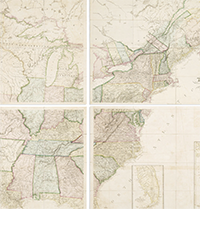
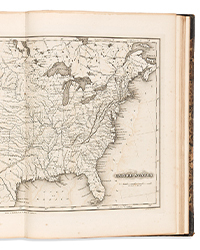
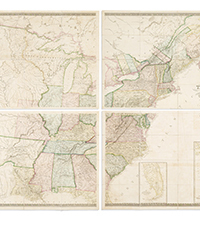
Swann, Dec. 9: Lot 206: John and Alexander Walker, Map of the United States, London and Liverpool, 1827.
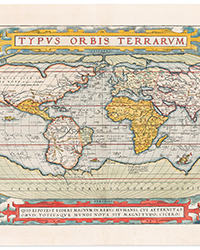
Swann, Dec. 9: Lot 223: Abraham Ortelius, Typus Orbis Terrarum, hand-colored double-page engraved world map, Antwerp, 1575.
Swann Maps & Atlases, Natural History & Color Plate Books December 9, 2025
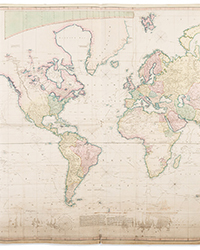
Swann, Dec. 9: Lot 233: Aaron Arrowsmith, Chart of the World, oversize engraved map on 8 sheets, London, 1790 (circa 1800).
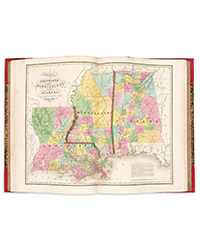
Swann, Dec. 9: Lot 239: Fielding Lucas, A General Atlas, 81 engraved maps and diagrams, Baltimore, 1823.
Swann, Dec. 9: Lot 240: Anthony Finley, A New American Atlas, 15 maps engraved by james hamilton young on 14 double-page sheets, Philadelphia, 1826.
Swann Maps & Atlases, Natural History & Color Plate Books December 9, 2025
Swann, Dec. 9: Lot 263: John Bachmann, Panorama of the Seat of War, portfolio of 4 double-page chromolithographed panoramic maps, New York, 1861.
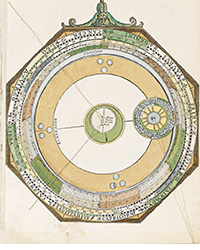
Swann, Dec. 9: Lot 265: Sebastian Münster, Cosmographei, Basel: Sebastian Henricpetri, 1558.
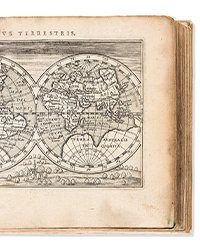
Swann, Dec. 9: Lot 271: Abraham Ortelius, Epitome Theatri Orteliani, Antwerp: Johann Baptist Vrients, 1601.
Swann Maps & Atlases, Natural History & Color Plate Books December 9, 2025
Swann, Dec. 9: Lot 283: Joris van Spilbergen, Speculum Orientalis Occidentalisque Indiae, Leiden: Nicolaus van Geelkercken for Jodocus Hondius, 1619.
Swann, Dec. 9: Lot 285: Levinus Hulsius, Achtzehender Theil der Newen Welt, 14 engraved folding maps, Frankfurt: Johann Frederick Weiss, 1623.
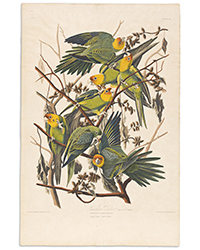
Swann, Dec. 9: Lot 341: John James Audubon, Carolina Parrot, Plate 26, London, 1827.
Sotheby’s Book Week December 9-17, 2025
Sotheby’s, Dec. 11: Darwin and Wallace. On the Tendency of Species to form Varieties..., [in:] Journal of the Proceedings of the Linnean Society, Vol. III, No. 9., 1858, Darwin announces the theory of natural selection. £100,000 to £150,000.
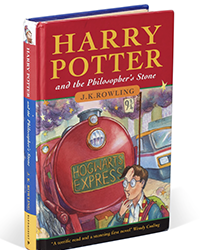
Sotheby’s, Dec. 11: J.K. Rowling. Harry Potter and the Philosopher's Stone, 1997, first edition, hardback issue, inscribed by the author pre-publication. £100,000 to £150,000.
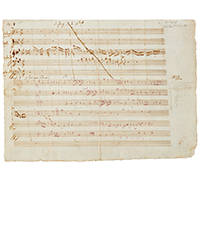
Sotheby’s, Dec. 11: Wolfgang Amadeus Mozart. Autograph sketchleaf including a probable draft for the E flat Piano Quartet, K.493, 1786. £150,000 to £200,000.
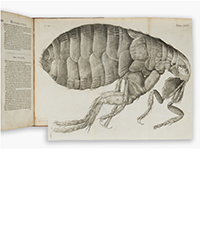
Sotheby’s, Dec. 12: Hooke, Robert. Micrographia: or some Physiological Descriptions of Minute Bodies made by Magnifying Glasses. London: James Allestry for the Royal Society, 1667. $12,000 to $15,000.
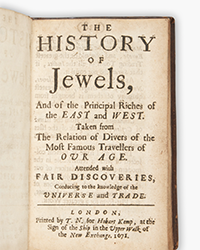
Sotheby’s, Dec. 12: Chappuzeau, Samuel. The history of jewels, first edition in English. London: T.N. for Hobart Kemp, 1671. $12,000 to $18,000.
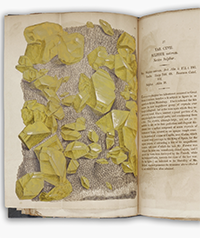
Sotheby’s, Dec. 12: Sowerby, James. Exotic Mineralogy, containing his most realistic mineral depictions, London: Benjamin Meredith, 1811, Arding and Merrett, 1817. $5,000 to $7,000.



![<b>Sotheby’s, Dec. 11:</b> Darwin and Wallace. On the Tendency of Species to form Varieties..., [in:] <i>Journal of the Proceedings of the Linnean Society,</i> Vol. III, No. 9., 1858, Darwin announces the theory of natural selection. £100,000 to £150,000.](https://ae-files.s3.amazonaws.com/AdvertisementPhotos/00d5fd41-2542-4a80-b119-4886d4b9925f.png "<b>Sotheby’s, Dec. 11:</b> Darwin and Wallace. On the Tendency of Species to form Varieties..., [in:] <i>Journal of the Proceedings of the Linnean Society,</i> Vol. III, No. 9., 1858, Darwin announces the theory of natural selection. £100,000 to £150,000.")