Rare Book Monthly
Book Catalogue Reviews - September - 2004 Issue
Alexander Hamilton: American History in the Making

This is a fascinating account of a complex, powerful and imperfect man.
By Bruce McKinney
On the 200th anniversary of the death of Alexander Hamilton [1757-1804], at the hands of Aaron Burr, Ron Chernow, the exceptional biographer, has issued a riveting account of this storied life. His book is simply Alexander Hamilton. To many Hamilton is simply an image on the US ten dollar bill but his story is an essential piece of the early American mosaic.
If Hamilton does not quite rise to the level of Washington, Jefferson and Lincoln in our national awareness it is not because his accomplishments are significantly less. Rather it is because, in our simplified view of history we remember presidents as the apexes of their eras. In this account Hamilton emerges as a gifted, singular force that brought exceptional intellect to the nascent American national experience, acted as the de facto chief of Staff to George Washington during the revolution, was then the principal writer of the Federalist, the series of essays written both to explain and to sell the new constitution in the 1780s. Later, when George Washington became the first President, Hamilton was appointed the first Secretary of the Treasury.
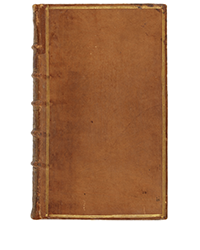
At the founding of the United States its constitutional form was not yet determined. The states were of different sizes, their economies both of different scales and dependencies, their populations slave, indentured and free. Each state was independent and jealously sought to maintain local advantages while tendering to the national union only the absolute minimum necessary. Common defense was easier to agree upon than economic union. Hamilton became the articulate voice and principal writer of the Federalist, a series of newspaper articles that were later collected in book form and published in many editions that progressively made the case for a strong national government. While none of the 85 essays are signed it is generally believed Hamilton contributed 52 articles, James Madison 28 and John Jay 5.
Once ratified the organizational steps called for in the constitution were taken. Washington was elected President and a provisional capitol, New York, established. Washington then called his government into being with the appointments of several secretaries, chief among them Alexander Hamilton as Secretary of the Treasury.
From the outset income for the national government was a problem. The states, that in many cases reluctantly supported a stronger union, withheld financial support. In time Hamilton would propose to Washington that import duties would least inconvenience the states and the monolithic tax collector that would become the carnivore we know today took its first bites. Within a few years the government would seek new sources of income and specifically to tax spirits [alcohol]. That would lead to America's first, but not last, tax revolt, the Whiskey Rebellion in western Pennsylvania in 1794.