Book Lust and the Cultural Erotics of Fine Printing
- by Mmegan Benton
Private bookplate reproduced in Phyllis and Eberhard Kronhausen's 1970 study of Erotic Bookplates
If a book’s binding was understood as skin or clothing, moving inside the book triggered erotic implications as well. Book lovers often spoke of the search for a book they desired to own as ‘wooing” or seducing it. When they were finally able to secure it, the moment of conquest, or ownership, was charged with sexual overtones when it involved the first opening of the books’ pages, or cutting apart the folded edges that remained after printing—another hallmark of preindustrial bookmaking that the Bodley Head and other fine publishers deliberately preserved to distance themselves from industrial mass production. Opening a book’s pages took on ritualistic meaning to even the most jaded bibliophile; as French writer Theophile Gautier shrugged “It is a virginity like any other, and that is always a pleasure to take.” For most, the occasion prompted rhapsodies, or, as another confessed when he used only his bare forefinger, “a kind of savage joy in the havoc I was making.”
Once inside the book, one encountered of course the pages. These obviously served to present the content. Yet this familiar function was complicated and even rivaled by the new aesthetic sensibility. A book was meant to be read, yes, but a fine book was also meant to be beautiful, an object of art and pleasure. When applied to page design, this mandate either disturbed or thrilled readers. For example, most fine editions featured exceedingly large margins, sometimes as much as a third of the page’s height. When margins are this exaggerated, their usual function of serving legibility is completely eclipsed by their role as art. They help define the book as an elite object, presenting to the hand and eye expanses of luxurious handmade paper. Such extravagant margins scandalized and enthralled many contemporaries. As the margins grew ever larger and the text seemed to recede from the page, some drolly noted that the ultimately beautiful book would have no print at all. One book lover wryly suggested to Oscar Wilde that he should “publish a book all margin; full of beautiful unwritten thoughts” not printed on Japanese paper and bound in Nile-green leather. Wilde agreed, stipulating that “there must be five hundred signed copies for particular friends, six for the general public, and one for America.”
The blank page has long resonated with erotic overtones. One bibliophile likened a book’s silk pastedowns and broad margins to silken underclothes and “soft and coaxing” bare shoulders. In an illustration of J-K. Huysmans’s novel Against Nature a decadent young aristocrat turns to the vast blank pages of a large folio in his search for sensual pleasure, his splayed fingers spread greedily across the verso page. Note the paintings on the wall, both images of nude women with their arms thrown up over their heads in vulnerable postures. Throughout bibliophilia blank pages and margins are often regarded as nudelike feminine space, a beautiful passive surface to be gazed upon and caressed by a connoisseur and to be given meaning by an author, artist, or reader.
Sotheby’s, Dec. 11: Darwin and Wallace. On the Tendency of Species to form Varieties..., [in:] Journal of the Proceedings of the Linnean Society, Vol. III, No. 9., 1858, Darwin announces the theory of natural selection. £100,000 to £150,000.
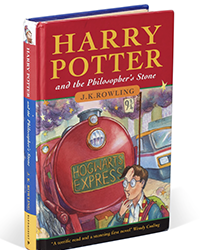
Sotheby’s, Dec. 11: J.K. Rowling. Harry Potter and the Philosopher's Stone, 1997, first edition, hardback issue, inscribed by the author pre-publication. £100,000 to £150,000.
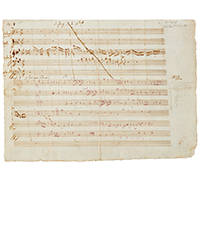
Sotheby’s, Dec. 11: Wolfgang Amadeus Mozart. Autograph sketchleaf including a probable draft for the E flat Piano Quartet, K.493, 1786. £150,000 to £200,000.
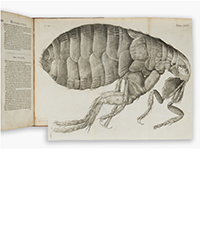
Sotheby’s, Dec. 12: Hooke, Robert. Micrographia: or some Physiological Descriptions of Minute Bodies made by Magnifying Glasses. London: James Allestry for the Royal Society, 1667. $12,000 to $15,000.
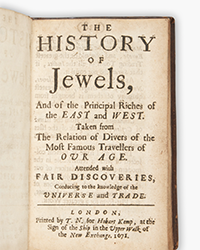
Sotheby’s, Dec. 12: Chappuzeau, Samuel. The history of jewels, first edition in English. London: T.N. for Hobart Kemp, 1671. $12,000 to $18,000.
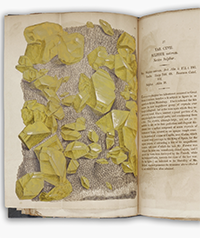
Sotheby’s, Dec. 12: Sowerby, James. Exotic Mineralogy, containing his most realistic mineral depictions, London: Benjamin Meredith, 1811, Arding and Merrett, 1817. $5,000 to $7,000.
Rare Book Hub is now mobile-friendly!
Swann Maps & Atlases, Natural History & Color Plate Books December 9, 2025
Swann, Dec. 9: Lot 156: Cornelis de Jode, Americae pars Borealis, double-page engraved map of North America, Antwerp, 1593.
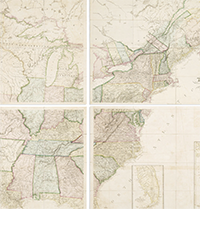
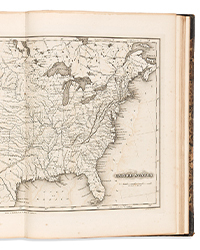
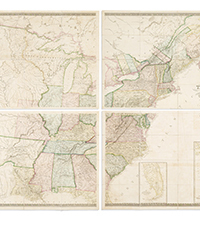
Swann, Dec. 9: Lot 206: John and Alexander Walker, Map of the United States, London and Liverpool, 1827.
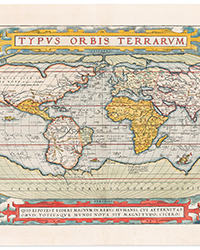
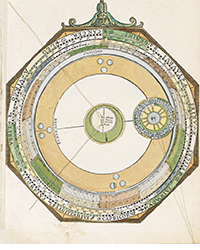
Swann, Dec. 9: Lot 223: Abraham Ortelius, Typus Orbis Terrarum, hand-colored double-page engraved world map, Antwerp, 1575.
Swann Maps & Atlases, Natural History & Color Plate Books December 9, 2025
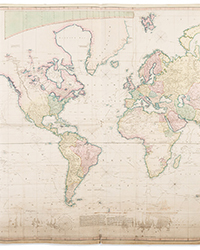
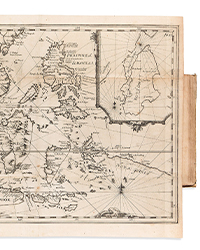
Swann, Dec. 9: Lot 233: Aaron Arrowsmith, Chart of the World, oversize engraved map on 8 sheets, London, 1790 (circa 1800).
Swann, Dec. 9: Lot 239: Fielding Lucas, A General Atlas, 81 engraved maps and diagrams, Baltimore, 1823.
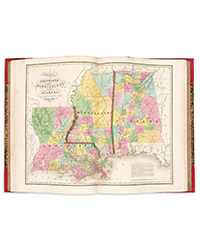
Swann, Dec. 9: Lot 240: Anthony Finley, A New American Atlas, 15 maps engraved by james hamilton young on 14 double-page sheets, Philadelphia, 1826.
Swann Maps & Atlases, Natural History & Color Plate Books December 9, 2025
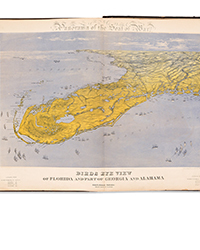
Swann, Dec. 9: Lot 263: John Bachmann, Panorama of the Seat of War, portfolio of 4 double-page chromolithographed panoramic maps, New York, 1861.
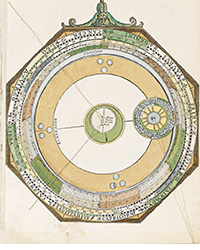
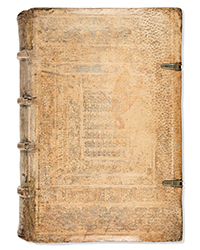
Swann, Dec. 9: Lot 265: Sebastian Münster, Cosmographei, Basel: Sebastian Henricpetri, 1558.
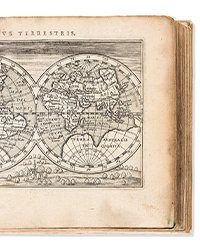
Swann, Dec. 9: Lot 271: Abraham Ortelius, Epitome Theatri Orteliani, Antwerp: Johann Baptist Vrients, 1601.
Swann Maps & Atlases, Natural History & Color Plate Books December 9, 2025
Swann, Dec. 9: Lot 283: Joris van Spilbergen, Speculum Orientalis Occidentalisque Indiae, Leiden: Nicolaus van Geelkercken for Jodocus Hondius, 1619.
Swann, Dec. 9: Lot 285: Levinus Hulsius, Achtzehender Theil der Newen Welt, 14 engraved folding maps, Frankfurt: Johann Frederick Weiss, 1623.
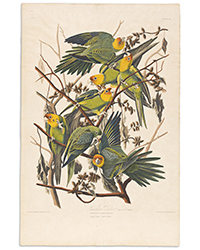
Swann, Dec. 9: Lot 341: John James Audubon, Carolina Parrot, Plate 26, London, 1827.


![<b>Sotheby’s, Dec. 11:</b> Darwin and Wallace. On the Tendency of Species to form Varieties..., [in:] <i>Journal of the Proceedings of the Linnean Society,</i> Vol. III, No. 9., 1858, Darwin announces the theory of natural selection. £100,000 to £150,000.](https://ae-files.s3.amazonaws.com/AdvertisementPhotos/00d5fd41-2542-4a80-b119-4886d4b9925f.png "<b>Sotheby’s, Dec. 11:</b> Darwin and Wallace. On the Tendency of Species to form Varieties..., [in:] <i>Journal of the Proceedings of the Linnean Society,</i> Vol. III, No. 9., 1858, Darwin announces the theory of natural selection. £100,000 to £150,000.")