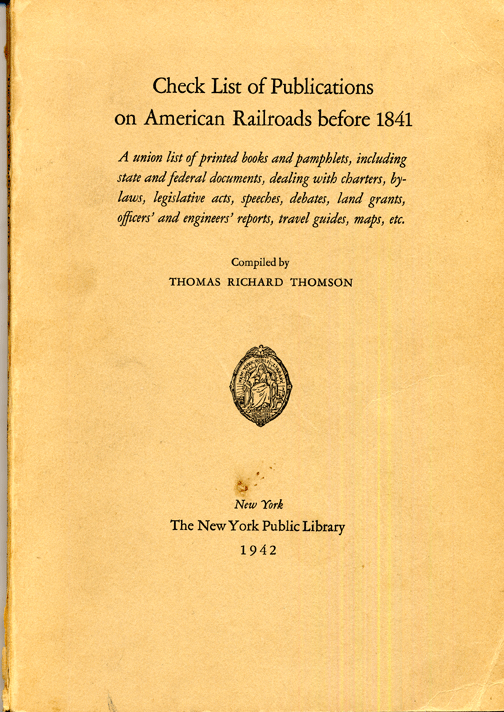
In 1942 the New York Public Library issued a 250 page catalogue on early books and other printed materials relating to the development of the railroad in the United States. It's a gem and we have added it both to the Americana Exchange Database and have created a Wiki Bibliography based on it. There are 2,865 entries for the period 1800 to 1840. It's a remarkable picture of early railroad development.
The 1841 cut-off seems to almost predate railroads but it turns out interest in rights-of-way and rail systems based on pre-steam power made the subject of "rail roads" a well-developed idea by 1840. The explosion in railroad construction, a national obsession to build railroads to connect almost every burg, village, town, city and port, would begin in earnest to take hold in the 1840's and lead to widespread railroad bankruptcies in the 1870's. In time many branch and feeder lines would be consolidated into the trunk systems from which the major 20th century American railroads emerged.
In the mid 19th century American population was mostly rural and there seemed to be little expectation among railroad promoters that, rather than simply connecting the countryside to cities, railroads would facilitate city migration. It turned out to be more of a one way street than most expected because [1] increasing farm efficiency reduced the labor component per bushel and gallon and [2] the developing industrial economy created better paying jobs in metropolitan areas. For many, once they saw city life, there was no going back except for the occasional visit. The mass exodus, already underway, would accelerate with the easy access and egress that railroads provided but more and more of the tickets would be one way. With the coming of the automobile even the trunk lines, that succeeded the initial panoply of branch lines, would begin to fail. Peoples' commitment was to convenience and all forms of transportation simply a means. Today the few feeder lines that still exist and offer coach service are novelties, Sunday excursions for holiday seekers.
This source captures a fair picture of the development of railroads in America as it enters the industrial age. The sources identified, begin in 1800 with references to the first efforts to transport by rail if not yet by steam power. Fulton applied steam, as a source of power, to boats in the first decade of the nineteenth century. George Stevens, of New Jersey, did the same for the railroad in 1826. By the early 1830's, demonstration railroads were operating in half a dozen states. By mid-decade, the railroad as corporation was emerging. By 1840 the nation was on the verge of transformation from an agricultural to an industrial economy. The railroads would turn out to be merely relay runners on a race on which they ran a single lap. In their time they were essential but soon expendable and it quickly turned out that most towns had too little to send out or bring in to justify the capital and labor involved. What no town was willing to live without in the 1850s and 1860s soon became failed investments in the 1870s.
Swann Maps & Atlases, Natural History & Color Plate Books December 9, 2025
Swann, Dec. 9: Lot 156: Cornelis de Jode, Americae pars Borealis, double-page engraved map of North America, Antwerp, 1593.
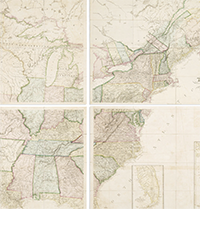
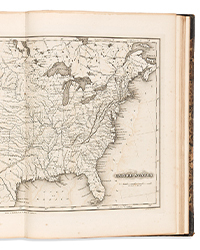
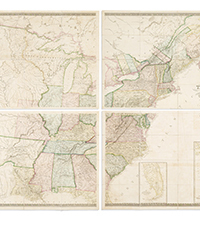
Swann, Dec. 9: Lot 206: John and Alexander Walker, Map of the United States, London and Liverpool, 1827.
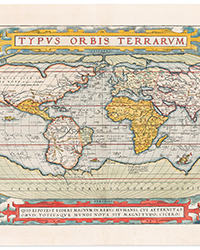
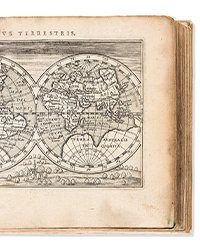
Swann, Dec. 9: Lot 223: Abraham Ortelius, Typus Orbis Terrarum, hand-colored double-page engraved world map, Antwerp, 1575.
Swann Maps & Atlases, Natural History & Color Plate Books December 9, 2025
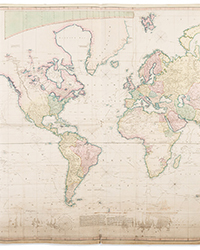
Swann, Dec. 9: Lot 233: Aaron Arrowsmith, Chart of the World, oversize engraved map on 8 sheets, London, 1790 (circa 1800).
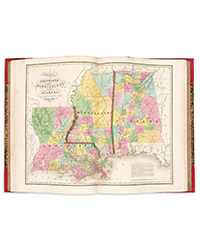
Swann, Dec. 9: Lot 239: Fielding Lucas, A General Atlas, 81 engraved maps and diagrams, Baltimore, 1823.
Swann, Dec. 9: Lot 240: Anthony Finley, A New American Atlas, 15 maps engraved by james hamilton young on 14 double-page sheets, Philadelphia, 1826.
Swann Maps & Atlases, Natural History & Color Plate Books December 9, 2025
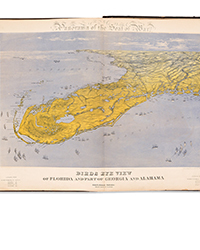
Swann, Dec. 9: Lot 263: John Bachmann, Panorama of the Seat of War, portfolio of 4 double-page chromolithographed panoramic maps, New York, 1861.
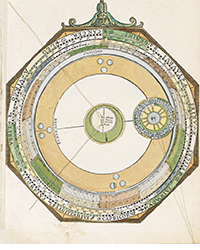
Swann, Dec. 9: Lot 265: Sebastian Münster, Cosmographei, Basel: Sebastian Henricpetri, 1558.
Swann, Dec. 9: Lot 271: Abraham Ortelius, Epitome Theatri Orteliani, Antwerp: Johann Baptist Vrients, 1601.
Swann Maps & Atlases, Natural History & Color Plate Books December 9, 2025
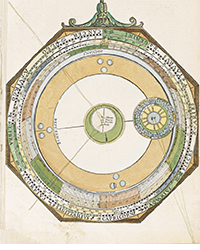
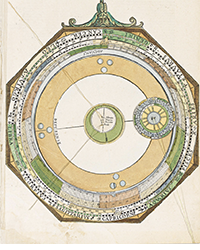
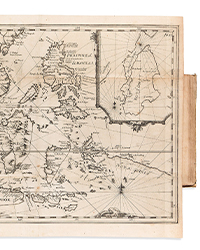
Swann, Dec. 9: Lot 283: Joris van Spilbergen, Speculum Orientalis Occidentalisque Indiae, Leiden: Nicolaus van Geelkercken for Jodocus Hondius, 1619.
Swann, Dec. 9: Lot 285: Levinus Hulsius, Achtzehender Theil der Newen Welt, 14 engraved folding maps, Frankfurt: Johann Frederick Weiss, 1623.
Swann, Dec. 9: Lot 341: John James Audubon, Carolina Parrot, Plate 26, London, 1827.
Sotheby’s Book Week December 9-17, 2025
Sotheby’s, Dec. 11: Darwin and Wallace. On the Tendency of Species to form Varieties..., [in:] Journal of the Proceedings of the Linnean Society, Vol. III, No. 9., 1858, Darwin announces the theory of natural selection. £100,000 to £150,000.
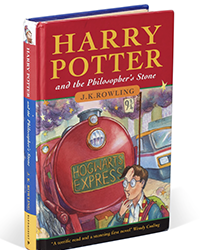
Sotheby’s, Dec. 11: J.K. Rowling. Harry Potter and the Philosopher's Stone, 1997, first edition, hardback issue, inscribed by the author pre-publication. £100,000 to £150,000.
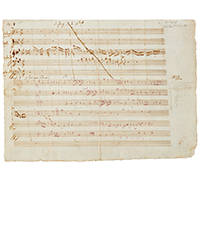
Sotheby’s, Dec. 11: Wolfgang Amadeus Mozart. Autograph sketchleaf including a probable draft for the E flat Piano Quartet, K.493, 1786. £150,000 to £200,000.
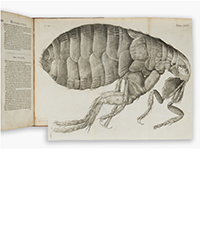
Sotheby’s, Dec. 12: Hooke, Robert. Micrographia: or some Physiological Descriptions of Minute Bodies made by Magnifying Glasses. London: James Allestry for the Royal Society, 1667. $12,000 to $15,000.
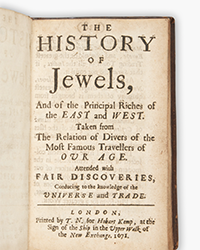
Sotheby’s, Dec. 12: Chappuzeau, Samuel. The history of jewels, first edition in English. London: T.N. for Hobart Kemp, 1671. $12,000 to $18,000.
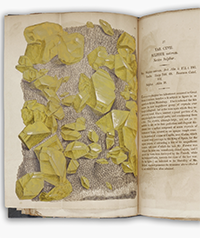
Sotheby’s, Dec. 12: Sowerby, James. Exotic Mineralogy, containing his most realistic mineral depictions, London: Benjamin Meredith, 1811, Arding and Merrett, 1817. $5,000 to $7,000.



![<b>Sotheby’s, Dec. 11:</b> Darwin and Wallace. On the Tendency of Species to form Varieties..., [in:] <i>Journal of the Proceedings of the Linnean Society,</i> Vol. III, No. 9., 1858, Darwin announces the theory of natural selection. £100,000 to £150,000.](https://ae-files.s3.amazonaws.com/AdvertisementPhotos/00d5fd41-2542-4a80-b119-4886d4b9925f.png "<b>Sotheby’s, Dec. 11:</b> Darwin and Wallace. On the Tendency of Species to form Varieties..., [in:] <i>Journal of the Proceedings of the Linnean Society,</i> Vol. III, No. 9., 1858, Darwin announces the theory of natural selection. £100,000 to £150,000.")