Deconstructing Twinkies: What's in those Things? - <i>A Book Review</i>
- by Michael Stillman
none
Or how about cellulose gum? This is a vegetarian item, though it comes from either trees or cotton plants, which few of us eat, and must be treated with lye and other unappetizing chemicals first. Still, it can hold 15-20 times its weight in water, just what is needed to keep that delicious, though strange "creme" perfectly moist.
Then come the pure chemical elements, things that are mined rather than grown. This certainly sounds unappetizing, but most of these are ones that appear in the little feared baking soda, and of course, the mined mineral we all sprinkle on our food -- salt. Perhaps ones that come from petroleum are even more frightening. Sorbic acid is the major preservative, extremely effective at killing mold. Will this petroleum-based ingredient kill you too? Not likely, since the same stuff used to be processed from berries. It's just cheaper to extract it from petroleum, which is, after all, organic material, albeit older than most we consume. Perhaps it's the sorbic acid that preserves petroleum's "freshness" for millions of years.
Along with his study of the source of the ingredients, Ettlinger brings us on a tour through many of the huge manufacturing plants. These products aren't made just for Twinkies, but for numerous other foods as well as non-food products. With a population of 300 million to feed in America alone, the quantities needed are astounding. My favorite is the egg-breaking facility in New Jersey that cracks open 7 million shells a day. Seven million! I cannot conceive of dealing with 7 million eggs every day. A machine splits the eggs open, while cupped hands on each side tilt and shake the eggs' two halves, like a cook's two hands with a cracked egg.
While the chemicals sound the most frightening, Ettlinger does bring up the really dangerous issue -- partially hydrogenated oils. Here is a very simplified, unscientific explanation. Due to the cost and health factors associated with animal fats, vegetable oil was seen as a healthy substitute. However, vegetable oil is a liquid, and a solid form is needed. It was discovered that pumping hydrogen though the oil would result in a solidified form. The hydrogen somehow clings to the molecules and adjusts their form accordingly. Partial hydrogenation, where enough hydrogen is added to cling only to some molecules, produced the ideal balance between liquid and solid form (soft solid). However, partial hydrogenation, for reasons perhaps no one fully understands, creates trans fats, oddly shaped molecules that increase our production of bad cholesterol and decrease the production of good. These things are deadly. These trans fats are no longer found in Twinkies, but their one-time presence, at a time when scientists believed they were a healthy substitute, can make you wonder if there is still more unknown danger lurking in these myriad ingredients that bear little resemblance to what we traditionally think of as food.
Swann Maps & Atlases, Natural History & Color Plate Books December 9, 2025
Swann, Dec. 9: Lot 156: Cornelis de Jode, Americae pars Borealis, double-page engraved map of North America, Antwerp, 1593.
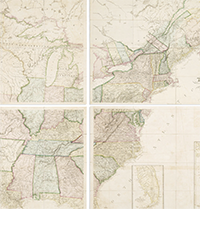
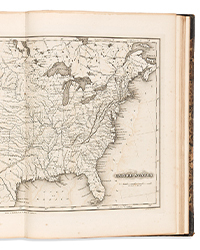
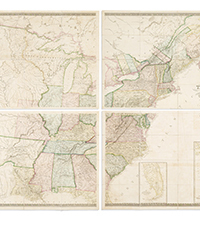
Swann, Dec. 9: Lot 206: John and Alexander Walker, Map of the United States, London and Liverpool, 1827.
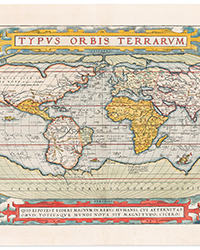
Swann, Dec. 9: Lot 223: Abraham Ortelius, Typus Orbis Terrarum, hand-colored double-page engraved world map, Antwerp, 1575.
Swann Maps & Atlases, Natural History & Color Plate Books December 9, 2025
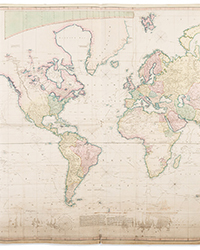
Swann, Dec. 9: Lot 233: Aaron Arrowsmith, Chart of the World, oversize engraved map on 8 sheets, London, 1790 (circa 1800).
Swann, Dec. 9: Lot 239: Fielding Lucas, A General Atlas, 81 engraved maps and diagrams, Baltimore, 1823.
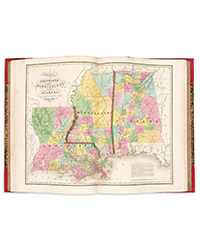
Swann, Dec. 9: Lot 240: Anthony Finley, A New American Atlas, 15 maps engraved by james hamilton young on 14 double-page sheets, Philadelphia, 1826.
Swann Maps & Atlases, Natural History & Color Plate Books December 9, 2025
Swann, Dec. 9: Lot 263: John Bachmann, Panorama of the Seat of War, portfolio of 4 double-page chromolithographed panoramic maps, New York, 1861.
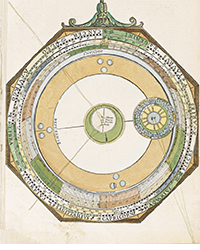
Swann, Dec. 9: Lot 265: Sebastian Münster, Cosmographei, Basel: Sebastian Henricpetri, 1558.
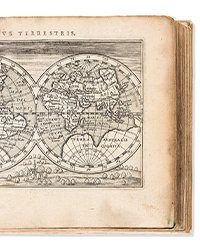
Swann, Dec. 9: Lot 271: Abraham Ortelius, Epitome Theatri Orteliani, Antwerp: Johann Baptist Vrients, 1601.
Swann Maps & Atlases, Natural History & Color Plate Books December 9, 2025
Swann, Dec. 9: Lot 283: Joris van Spilbergen, Speculum Orientalis Occidentalisque Indiae, Leiden: Nicolaus van Geelkercken for Jodocus Hondius, 1619.
Swann, Dec. 9: Lot 285: Levinus Hulsius, Achtzehender Theil der Newen Welt, 14 engraved folding maps, Frankfurt: Johann Frederick Weiss, 1623.
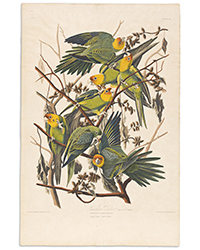
Swann, Dec. 9: Lot 341: John James Audubon, Carolina Parrot, Plate 26, London, 1827.
Sotheby’s Book Week December 9-17, 2025
Sotheby’s, Dec. 11: Darwin and Wallace. On the Tendency of Species to form Varieties..., [in:] Journal of the Proceedings of the Linnean Society, Vol. III, No. 9., 1858, Darwin announces the theory of natural selection. £100,000 to £150,000.
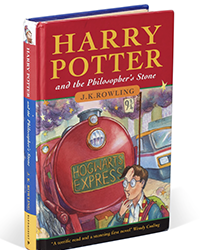
Sotheby’s, Dec. 11: J.K. Rowling. Harry Potter and the Philosopher's Stone, 1997, first edition, hardback issue, inscribed by the author pre-publication. £100,000 to £150,000.
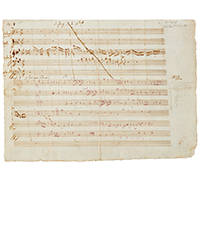
Sotheby’s, Dec. 11: Wolfgang Amadeus Mozart. Autograph sketchleaf including a probable draft for the E flat Piano Quartet, K.493, 1786. £150,000 to £200,000.
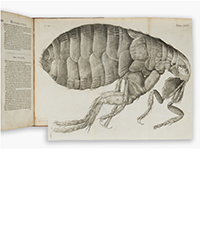
Sotheby’s, Dec. 12: Hooke, Robert. Micrographia: or some Physiological Descriptions of Minute Bodies made by Magnifying Glasses. London: James Allestry for the Royal Society, 1667. $12,000 to $15,000.
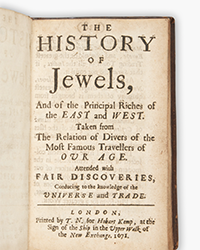
Sotheby’s, Dec. 12: Chappuzeau, Samuel. The history of jewels, first edition in English. London: T.N. for Hobart Kemp, 1671. $12,000 to $18,000.
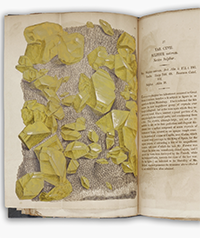
Sotheby’s, Dec. 12: Sowerby, James. Exotic Mineralogy, containing his most realistic mineral depictions, London: Benjamin Meredith, 1811, Arding and Merrett, 1817. $5,000 to $7,000.



![<b>Sotheby’s, Dec. 11:</b> Darwin and Wallace. On the Tendency of Species to form Varieties..., [in:] <i>Journal of the Proceedings of the Linnean Society,</i> Vol. III, No. 9., 1858, Darwin announces the theory of natural selection. £100,000 to £150,000.](https://ae-files.s3.amazonaws.com/AdvertisementPhotos/00d5fd41-2542-4a80-b119-4886d4b9925f.png "<b>Sotheby’s, Dec. 11:</b> Darwin and Wallace. On the Tendency of Species to form Varieties..., [in:] <i>Journal of the Proceedings of the Linnean Society,</i> Vol. III, No. 9., 1858, Darwin announces the theory of natural selection. £100,000 to £150,000.")