The Italian play has apparently never been published. Legrand’s, on the contrary, has been several times; it was even reproduced in Maurice’s book, in 1859, for the greatest joy of all slang’s lovers. This language, used by thieves and described in 1690 by Furetière as “vicious and corrupted” became extremely popular following Legrand’s play. “Shall we battre l’entiphe sur le grand trimat?” asks Cartouche to his men. A note here reads: “A slang expression to say, let’s go to the highway.” Later, he asks: “What did you pincé (rob)?” These terms were colourful, as well as the nicknames of Cartouche’s men such as La Pinse (The Robber), L’Estocade (Deathblow) or Bel-Humeur (Goodmood). Yet, we were still far from the incredible nicknames of the real “Cartouchians”, as exposed in their death warrants: Chevalier le Craqueur (Esquire The Cracker), Tête de Mouton (Sheep Head), The Fat Bourguignon, alias Petit Brin d’Amour (Least Bit of Love) or Golden Thighs.
Legrand did not use a lot of slang in his play, but he appeared to be well informed. As underlined by Claudine Nédélec in Analyse et étude de l’argot (Grihl, 2007): “The most extraordinary part of the play writer’s project, was his visiting the famous robber Cartouche in jail, alongside the actor who was to impersonate him in the play, Jean-Baptiste Quinault.” The story was revealed by a young “Cartouchian” by the name of Balagny, just before he was himself broken on the wheel: “One day (the Lieutenant-Criminel and the King’s Prosecutor) entered my cell (...) They were with two gentlemen dressed in black, whom they introduced to me as Mr Legrand, the author of a play entitled Cartouche, and Mr Quinault, who was to play the role of my unfortunate friend (Cartouche—editor’s note).” Cartouche was sent for, then they opened a few bottles and offered some good tobacco. “They asked us to show them some of our tricks and to speak slang; we willingly complied. The two actors were taking notes as we talked (...). We had a good laugh and we spent a very good evening.” Mathieu Marais, who wrote Journal during the Régence, writes: “Everyone in Paris was surprised to hear this indecent story, which smells corruption.” As a matter of fact, justice soon heard both magistrates, as well as Legrand—one more scandal.
The slang is totally absent from all French literary works from 1644 to 1721. The rabble’s language was too common to suit the refined taste of the Grand Siècle. But other days, other ways: “Around 1720," explains Claudine Nédélec, "the Comédie française had to attract an audience as some new “popular” shows and plays, funny, new and innovative, were dragging them away...” As far as Legrand was concerned, slang was probably just another way to denounce false-pretences. Claudine Nédélec says it all: “The mask of a nice language sometimes covers worse things than the openly marginal slang of the thieves; language is just a mask among many others.”
As exposed by our little play, the Haves have hardly ever behaved better than the “Cartouchians”—most of the time, they are just a bunch of hypocritical villains who hide their wickedness under the mask of virtue. In 1721, corruption and maladministration were the order of the day, but anger was festering in the hearts of the French. When it erupted, it gave birth to the Révolution of 1789. Today, as we are experiencing the worst financial crisis ever, our gentle bankers—responsible for the said crisis—and our virtuous politicians are sending to prison the contemporary “Cartouchians”, while laughing all the way to their bank... in Panama. And Legrand’s play seems as accurate as ever. So, “is Cartouche really dead, Gentlemen?” Maybe not yet.
SD Scandinavian Art & Rare Book Auctions The Odfjell Collection Polar – History – Ornithology – Colour Plate Books Ending December 4th
Scandinavian Art & Rare Books Auctions, Dec. 4: ROALD AMUNDSEN: «Sydpolen» [ The South Pole] 1912. First edition in jackets and publisher's slip case.
Scandinavian Art & Rare Books Auctions, Dec. 4: AMUNDSEN & NANSEN: «Fram over Polhavet» [Farthest North] 1897. AMUNDSEN's COPY!
Scandinavian Art & Rare Books Auctions, Dec. 4: ERNEST SHACKLETON [ed.]: «Aurora Australis» 1908. First edition. The NORWAY COPY.
Scandinavian Art & Rare Books Auctions, Dec. 4: ERNEST SHACKLETON: «The heart of the Antarctic» + SUPPLEMENT «The Antarctic Book», 1909.
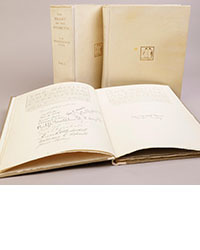
Scandinavian Art & Rare Books Auctions, Dec. 4: SHACKLETON, BERNACCHI, CHERRY-GARRARD [ed.]: «The South Polar Times» I-III, 1902-1911.
SD Scandinavian Art & Rare Book Auctions The Odfjell Collection Polar – History – Ornithology – Colour Plate Books Ending December 4th
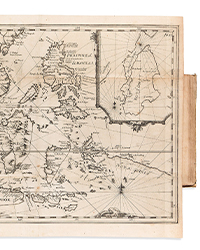
Scandinavian Art & Rare Books Auctions, Dec. 4: [WILLEM BARENTSZ & HENRY HUDSON] - SAEGHMAN: «Verhael van de vier eerste schip-vaerden […]», 1663.
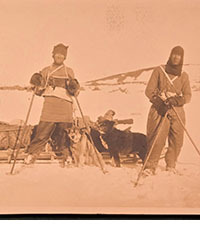
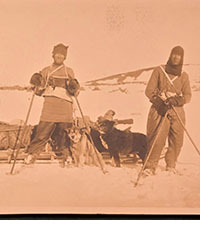
Scandinavian Art & Rare Books Auctions, Dec. 4: TERRA NOVA EXPEDITION | LIEUTENANT HENRY ROBERTSON BOWERS: «At the South Pole.», Gelatin Silver Print. [10¾ x 15in. (27.2 x 38.1cm.) ].
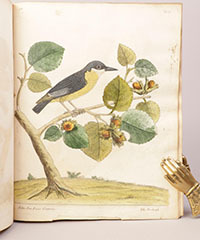
Scandinavian Art & Rare Books Auctions, Dec. 4: ELEAZAR ALBIN: «A natural History of Birds.» + «A Supplement», 1738-40. Wonderful coloured plates.
Scandinavian Art & Rare Books Auctions, Dec. 4: PAUL GAIMARD: «Voyage de la Commision scientific du Nord, en Scandinavie, […]», c. 1842-46. ONLY HAND COLOURED COPY KNOWN WITH TWO ORIGINAL PAINTINGS BY BIARD.
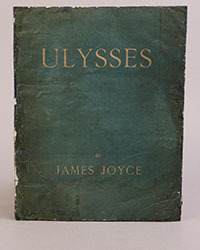
Scandinavian Art & Rare Books Auctions, Dec. 4: JAMES JOYCE: «Ulysses», 1922. FIRST EDITION IN ORIGINAL WRAPPERS.
Sotheby’s Book Week December 9-17, 2025
Sotheby’s, Dec. 11: Darwin and Wallace. On the Tendency of Species to form Varieties..., [in:] Journal of the Proceedings of the Linnean Society, Vol. III, No. 9., 1858, Darwin announces the theory of natural selection. £100,000 to £150,000.
Sotheby’s, Dec. 11: J.K. Rowling. Harry Potter and the Philosopher's Stone, 1997, first edition, hardback issue, inscribed by the author pre-publication. £100,000 to £150,000.
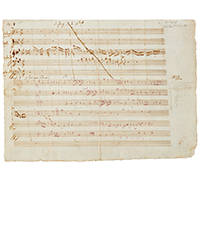
Sotheby’s, Dec. 11: Wolfgang Amadeus Mozart. Autograph sketchleaf including a probable draft for the E flat Piano Quartet, K.493, 1786. £150,000 to £200,000.
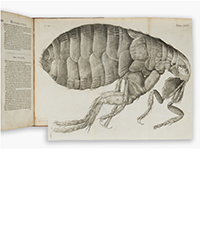
Sotheby’s, Dec. 12: Hooke, Robert. Micrographia: or some Physiological Descriptions of Minute Bodies made by Magnifying Glasses. London: James Allestry for the Royal Society, 1667. $12,000 to $15,000.
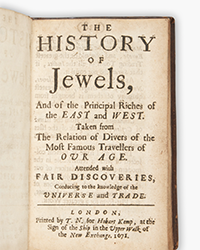
Sotheby’s, Dec. 12: Chappuzeau, Samuel. The history of jewels, first edition in English. London: T.N. for Hobart Kemp, 1671. $12,000 to $18,000.
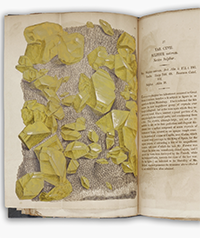
Sotheby’s, Dec. 12: Sowerby, James. Exotic Mineralogy, containing his most realistic mineral depictions, London: Benjamin Meredith, 1811, Arding and Merrett, 1817. $5,000 to $7,000.
Rare Book Hub is now mobile-friendly!
Swann Maps & Atlases, Natural History & Color Plate Books December 9, 2025
Swann, Dec. 9: Lot 156: Cornelis de Jode, Americae pars Borealis, double-page engraved map of North America, Antwerp, 1593.
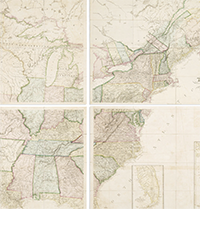
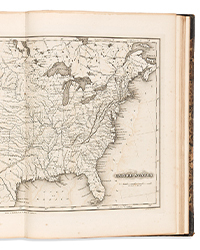
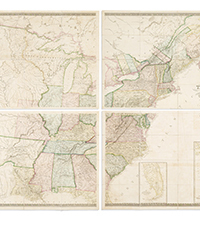
Swann, Dec. 9: Lot 206: John and Alexander Walker, Map of the United States, London and Liverpool, 1827.
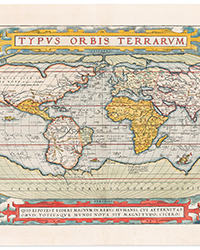
Swann, Dec. 9: Lot 223: Abraham Ortelius, Typus Orbis Terrarum, hand-colored double-page engraved world map, Antwerp, 1575.
Swann Maps & Atlases, Natural History & Color Plate Books December 9, 2025
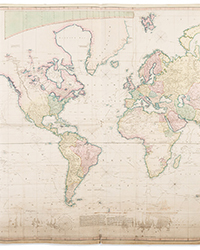
Swann, Dec. 9: Lot 233: Aaron Arrowsmith, Chart of the World, oversize engraved map on 8 sheets, London, 1790 (circa 1800).
Swann, Dec. 9: Lot 239: Fielding Lucas, A General Atlas, 81 engraved maps and diagrams, Baltimore, 1823.
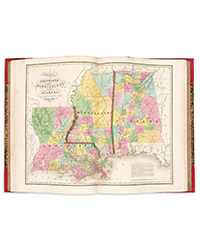
Swann, Dec. 9: Lot 240: Anthony Finley, A New American Atlas, 15 maps engraved by james hamilton young on 14 double-page sheets, Philadelphia, 1826.
Swann Maps & Atlases, Natural History & Color Plate Books December 9, 2025
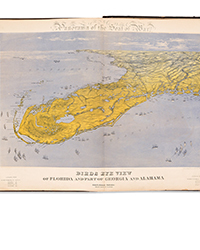
Swann, Dec. 9: Lot 263: John Bachmann, Panorama of the Seat of War, portfolio of 4 double-page chromolithographed panoramic maps, New York, 1861.
Swann, Dec. 9: Lot 265: Sebastian Münster, Cosmographei, Basel: Sebastian Henricpetri, 1558.
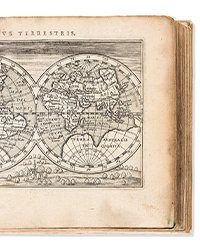
Swann, Dec. 9: Lot 271: Abraham Ortelius, Epitome Theatri Orteliani, Antwerp: Johann Baptist Vrients, 1601.
Swann Maps & Atlases, Natural History & Color Plate Books December 9, 2025
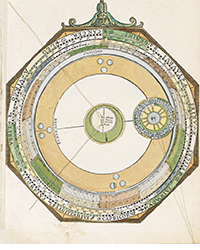
Swann, Dec. 9: Lot 283: Joris van Spilbergen, Speculum Orientalis Occidentalisque Indiae, Leiden: Nicolaus van Geelkercken for Jodocus Hondius, 1619.
Swann, Dec. 9: Lot 285: Levinus Hulsius, Achtzehender Theil der Newen Welt, 14 engraved folding maps, Frankfurt: Johann Frederick Weiss, 1623.
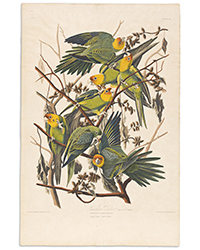
Swann, Dec. 9: Lot 341: John James Audubon, Carolina Parrot, Plate 26, London, 1827.


![<b>Scandinavian Art & Rare Books Auctions, Dec. 4:</b> ROALD AMUNDSEN: «Sydpolen» [ The South Pole] 1912. First edition in jackets and publisher's slip case.](https://ae-files.s3.amazonaws.com/AdvertisementPhotos/0a99416d-9c0f-4fa3-afdd-7532ca8a2b2c.jpg "<b>Scandinavian Art & Rare Books Auctions, Dec. 4:</b> ROALD AMUNDSEN: «Sydpolen» [ The South Pole] 1912. First edition in jackets and publisher's slip case.")
![<b>Scandinavian Art & Rare Books Auctions, Dec. 4:</b> AMUNDSEN & NANSEN: «Fram over Polhavet» [Farthest North] 1897. AMUNDSEN's COPY!](https://ae-files.s3.amazonaws.com/AdvertisementPhotos/a077b4a5-0477-4c47-9847-0158cf045843.jpg "<b>Scandinavian Art & Rare Books Auctions, Dec. 4:</b> AMUNDSEN & NANSEN: «Fram over Polhavet» [Farthest North] 1897. AMUNDSEN's COPY!")
![<b>Scandinavian Art & Rare Books Auctions, Dec. 4:</b> ERNEST SHACKLETON [ed.]: «Aurora Australis» 1908. First edition. The NORWAY COPY.](https://ae-files.s3.amazonaws.com/AdvertisementPhotos/6363a735-e622-4d0a-852e-07cef58eccbe.jpg "<b>Scandinavian Art & Rare Books Auctions, Dec. 4:</b> ERNEST SHACKLETON [ed.]: «Aurora Australis» 1908. First edition. The NORWAY COPY.")
![<b>Scandinavian Art & Rare Books Auctions, Dec. 4:</b> SHACKLETON, BERNACCHI, CHERRY-GARRARD [ed.]: «The South Polar Times» I-III, 1902-1911.](https://ae-files.s3.amazonaws.com/AdvertisementPhotos/3ee16d5b-a2ec-4c03-aeb6-aa3fcfec3a5e.jpg "<b>Scandinavian Art & Rare Books Auctions, Dec. 4:</b> SHACKLETON, BERNACCHI, CHERRY-GARRARD [ed.]: «The South Polar Times» I-III, 1902-1911.")
![<b>Scandinavian Art & Rare Books Auctions, Dec. 4:</b> [WILLEM BARENTSZ & HENRY HUDSON] - SAEGHMAN: «Verhael van de vier eerste schip-vaerden […]», 1663.](https://ae-files.s3.amazonaws.com/AdvertisementPhotos/d5f50485-7faa-423f-af0c-803b964dd2ba.jpg "<b>Scandinavian Art & Rare Books Auctions, Dec. 4:</b> [WILLEM BARENTSZ & HENRY HUDSON] - SAEGHMAN: «Verhael van de vier eerste schip-vaerden […]», 1663.")
![<b>Scandinavian Art & Rare Books Auctions, Dec. 4:</b> TERRA NOVA EXPEDITION | LIEUTENANT HENRY ROBERTSON BOWERS: «At the South Pole.», Gelatin Silver Print. [10¾ x 15in. (27.2 x 38.1cm.) ].](https://ae-files.s3.amazonaws.com/AdvertisementPhotos/fb024365-7d7a-4510-9859-9d26b5c266cf.jpg "<b>Scandinavian Art & Rare Books Auctions, Dec. 4:</b> TERRA NOVA EXPEDITION | LIEUTENANT HENRY ROBERTSON BOWERS: «At the South Pole.», Gelatin Silver Print. [10¾ x 15in. (27.2 x 38.1cm.) ].")
![<b>Scandinavian Art & Rare Books Auctions, Dec. 4:</b> PAUL GAIMARD: «Voyage de la Commision scientific du Nord, en Scandinavie, […]», c. 1842-46. ONLY HAND COLOURED COPY KNOWN WITH TWO ORIGINAL PAINTINGS BY BIARD.](https://ae-files.s3.amazonaws.com/AdvertisementPhotos/a7c0eda0-9d8b-43ac-a504-58923308d5a4.jpg "<b>Scandinavian Art & Rare Books Auctions, Dec. 4:</b> PAUL GAIMARD: «Voyage de la Commision scientific du Nord, en Scandinavie, […]», c. 1842-46. ONLY HAND COLOURED COPY KNOWN WITH TWO ORIGINAL PAINTINGS BY BIARD.")
![<b>Sotheby’s, Dec. 11:</b> Darwin and Wallace. On the Tendency of Species to form Varieties..., [in:] <i>Journal of the Proceedings of the Linnean Society,</i> Vol. III, No. 9., 1858, Darwin announces the theory of natural selection. £100,000 to £150,000.](https://ae-files.s3.amazonaws.com/AdvertisementPhotos/00d5fd41-2542-4a80-b119-4886d4b9925f.png "<b>Sotheby’s, Dec. 11:</b> Darwin and Wallace. On the Tendency of Species to form Varieties..., [in:] <i>Journal of the Proceedings of the Linnean Society,</i> Vol. III, No. 9., 1858, Darwin announces the theory of natural selection. £100,000 to £150,000.")