Through the 17th century the focus was on establishing ownership via narrative. To look at early maps you might think the territories described had been explored but mostly they hadn't. An expedition west across North America on foot or by canoe and a ship coasting the American western shore, both provided only faint suggestion as to what lay between. Nevertheless flags, that could not be planted in person, were staked on maps and disparate places confirmed as colonies by competing realms in exchange for acknowledgment of their similarly grand claims, the "I'll trade you my Boardwalk for your Pacific and Pennsylvania." "I don't know what to call this continent but I claim it." The American Experience traces evolving hope and aspiration as it hardens into knowledge.
When Europeans came to settle these territories they brought three things, disease, perception and ambition. Their immunity to small pox in short order emptied both North and South America of most of its indigenous populations. Guns were hardly necessary. Immune systems that had never experienced small pox collapsed in its wake. Those who survived saw their communities decline. Where they cooperated they were often enslaved or at minimum, marginalized. In the empty space of the new world that emerged though the narratives of successive explorations and colonization the principal export from Europe, and import into the new world became the ideas that germinated into wildly new mutations. Religion, straight-jacketed in Europe, would explode into a thousand variations. Poisonous class and racial ideas would in some places be planted and became impossible to eradicate. In other areas tolerance took hold.
Along the way fear and avarice were sometimes coachmen on the wagons moving west. History wasn't always pretty but it could be cleaned and often was. It turns out historical memory has always been a suspect thing. The colonies rebelled but only landed white men could vote. Woman and slaves existed but just below the story line. In time we would remember that slavery ended but ignore that it had existed. In the post Civil War south the black was re-enslaved for another one hundred years under the rubric of Jim Crow. But never mind. If slavery was once the accepted standard we instead remember that it ended. If women were repressed and subjugated we remember they won the right to vote in 1920. If blacks were harried, suppressed and held in temporal bondage in the south and later corralled into circumscribed spaces in the north we choose instead to remember Martin Luther King. In doing this we remember our achievements but also distort the past. It's not wrong to remember heroes but it is a mistake to misremember history.
The American story is a difficult tale and its original source material the records that confirm its complexity, an extraordinary story but one told as often in omission as in declarative sentences. It is a mind-numbing indictment that reality is, and always has been, mostly a bystander when history has been written.
Swann Maps & Atlases, Natural History & Color Plate Books December 9, 2025
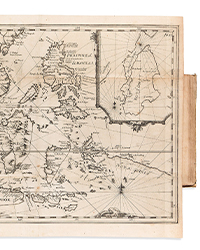
Swann, Dec. 9: Lot 156: Cornelis de Jode, Americae pars Borealis, double-page engraved map of North America, Antwerp, 1593.
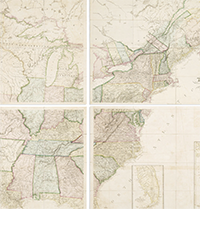
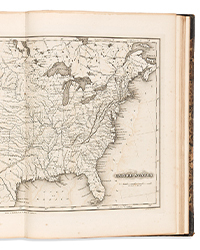
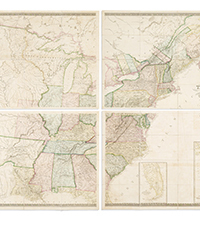
Swann, Dec. 9: Lot 206: John and Alexander Walker, Map of the United States, London and Liverpool, 1827.
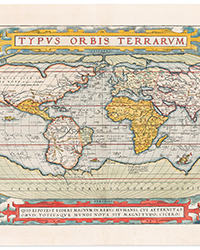
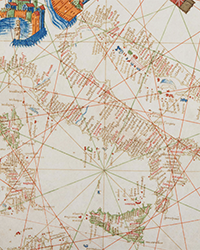
Swann, Dec. 9: Lot 223: Abraham Ortelius, Typus Orbis Terrarum, hand-colored double-page engraved world map, Antwerp, 1575.
Swann Maps & Atlases, Natural History & Color Plate Books December 9, 2025
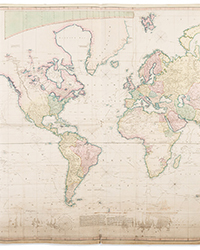
Swann, Dec. 9: Lot 233: Aaron Arrowsmith, Chart of the World, oversize engraved map on 8 sheets, London, 1790 (circa 1800).
Swann, Dec. 9: Lot 239: Fielding Lucas, A General Atlas, 81 engraved maps and diagrams, Baltimore, 1823.
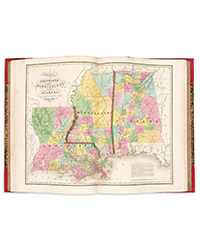
Swann, Dec. 9: Lot 240: Anthony Finley, A New American Atlas, 15 maps engraved by james hamilton young on 14 double-page sheets, Philadelphia, 1826.
Swann Maps & Atlases, Natural History & Color Plate Books December 9, 2025
Swann, Dec. 9: Lot 263: John Bachmann, Panorama of the Seat of War, portfolio of 4 double-page chromolithographed panoramic maps, New York, 1861.
Swann, Dec. 9: Lot 265: Sebastian Münster, Cosmographei, Basel: Sebastian Henricpetri, 1558.
Swann, Dec. 9: Lot 271: Abraham Ortelius, Epitome Theatri Orteliani, Antwerp: Johann Baptist Vrients, 1601.
Swann Maps & Atlases, Natural History & Color Plate Books December 9, 2025
Swann, Dec. 9: Lot 283: Joris van Spilbergen, Speculum Orientalis Occidentalisque Indiae, Leiden: Nicolaus van Geelkercken for Jodocus Hondius, 1619.
Swann, Dec. 9: Lot 285: Levinus Hulsius, Achtzehender Theil der Newen Welt, 14 engraved folding maps, Frankfurt: Johann Frederick Weiss, 1623.
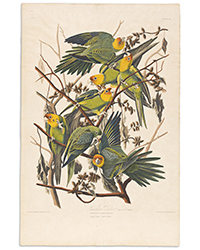
Swann, Dec. 9: Lot 341: John James Audubon, Carolina Parrot, Plate 26, London, 1827.
Sotheby’s Book Week December 9-17, 2025
Sotheby’s, Dec. 11: Darwin and Wallace. On the Tendency of Species to form Varieties..., [in:] Journal of the Proceedings of the Linnean Society, Vol. III, No. 9., 1858, Darwin announces the theory of natural selection. £100,000 to £150,000.
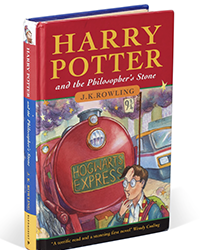
Sotheby’s, Dec. 11: J.K. Rowling. Harry Potter and the Philosopher's Stone, 1997, first edition, hardback issue, inscribed by the author pre-publication. £100,000 to £150,000.
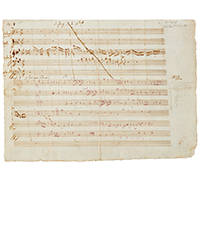
Sotheby’s, Dec. 11: Wolfgang Amadeus Mozart. Autograph sketchleaf including a probable draft for the E flat Piano Quartet, K.493, 1786. £150,000 to £200,000.
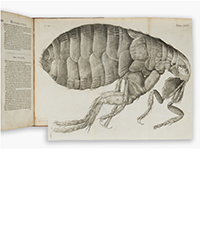
Sotheby’s, Dec. 12: Hooke, Robert. Micrographia: or some Physiological Descriptions of Minute Bodies made by Magnifying Glasses. London: James Allestry for the Royal Society, 1667. $12,000 to $15,000.
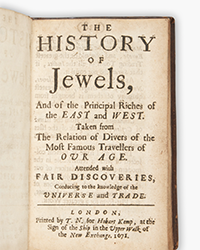
Sotheby’s, Dec. 12: Chappuzeau, Samuel. The history of jewels, first edition in English. London: T.N. for Hobart Kemp, 1671. $12,000 to $18,000.
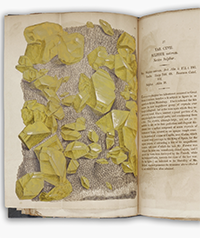
Sotheby’s, Dec. 12: Sowerby, James. Exotic Mineralogy, containing his most realistic mineral depictions, London: Benjamin Meredith, 1811, Arding and Merrett, 1817. $5,000 to $7,000.
Heritage Auctions Rare Books Signature Auction December 15, 2025
Heritage, Dec. 15: John Donne. Poems, By J. D. With Elegies on the Author's Death. London: M[iles]. F[lesher]. for John Marriot, 1633.
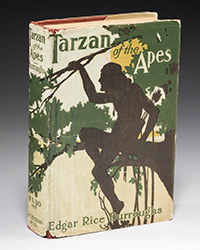
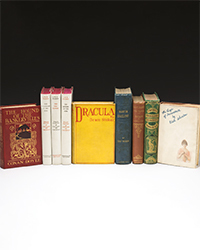
Heritage, Dec. 15: Edgar Rice Burroughs. Tarzan of the Apes.
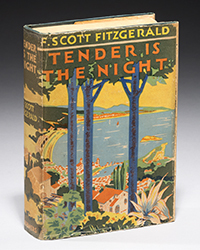
Heritage, Dec. 15: F. Scott Fitzgerald. Tender is the Night. A Romance.
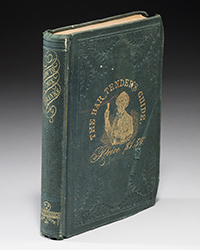
Heritage, Dec. 15: Jerry Thomas. How to Mix Drinks, or the Bon-Vivant's Companion, Containing Clear and Reliable Directions for Mixing All the Beverages Used in the United States…




![<b>Sotheby’s, Dec. 11:</b> Darwin and Wallace. On the Tendency of Species to form Varieties..., [in:] <i>Journal of the Proceedings of the Linnean Society,</i> Vol. III, No. 9., 1858, Darwin announces the theory of natural selection. £100,000 to £150,000.](https://ae-files.s3.amazonaws.com/AdvertisementPhotos/00d5fd41-2542-4a80-b119-4886d4b9925f.png "<b>Sotheby’s, Dec. 11:</b> Darwin and Wallace. On the Tendency of Species to form Varieties..., [in:] <i>Journal of the Proceedings of the Linnean Society,</i> Vol. III, No. 9., 1858, Darwin announces the theory of natural selection. £100,000 to £150,000.")
![<b>Heritage, Dec. 15:</b> John Donne. <i>Poems, By J. D. With Elegies on the Author's Death.</i> London: M[iles]. F[lesher]. for John Marriot, 1633.](https://ae-files.s3.amazonaws.com/AdvertisementPhotos/8caddaea-4c1f-47a7-9455-62f53af36e3f.jpg "<b>Heritage, Dec. 15:</b> John Donne. <i>Poems, By J. D. With Elegies on the Author's Death.</i> London: M[iles]. F[lesher]. for John Marriot, 1633.")